
UI/UX Design for an AI-Driven Strategic Marketing Platform

.webp)
UI/UX Design for an AI-Driven Strategic Marketing Platform
Element X came out of a simple frustration — one that anyone who's run a marketing campaign will recognize. Even with the best tools available, building a campaign still means jumping between platforms, translating data, and stitching together a strategy by hand. The process takes days before a single ad goes live.
Our task was to change that. We designed the end-to-end UI/UX for a platform where a marketer types an objective in plain language, and the system handles the rest.
This project won a Red Dot Design Award in the category of Apps, Business in 2025.
.webp)
.svg)

When Users Trust the System, the Numbers Follow
These metrics come from a closed beta with 140 marketers across SMB and mid-market teams, tested over 6 weeks.
.webp)
.webp)
How Do You Make Professionals Trust an AI System?
Marketers own their campaigns. Every targeting decision, every creative choice — that sense of control is part of how they work. Asking them to hand that process to an AI isn't a UX problem. It's a trust problem.
On top of that, the platform had to hold genuine complexity — strategy, audience segmentation, creative production, and analytics — in a single flow, without overwhelming the people actually using it.
.webp)
Designing for Trust
We ran 23 in-depth interviews with digital marketers and growth strategists, and audited how teams actually use Meta Ads, Google Ads, and Canva day-to-day. The pattern was clear: people don't resist AI — they resist opacity. Show your reasoning, let them adjust, and they'll engage.
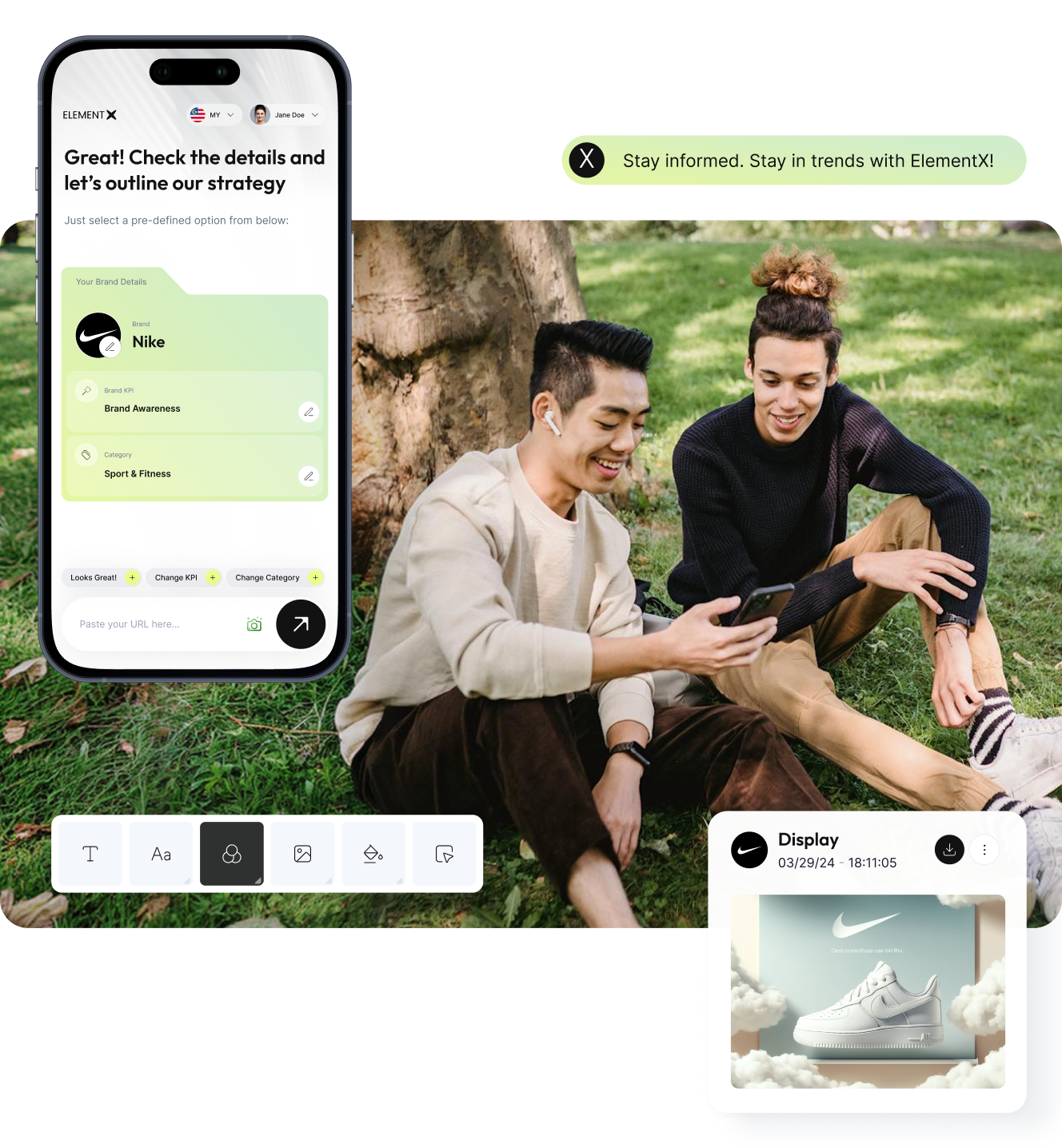
That insight drove three design decisions. Conversational Flow replaced form-based inputs with a guided chatbot that turns intent into campaign logic. Progressive Context Visibility kept each stage focused — no feature dumps, no buried options. And a Behavioral Feedback Loop made the AI's thinking legible, with editable outputs at every step.
Then testing humbled us. Users weren't happy just approving what the AI produced — they wanted to shape it. We rebuilt the Creative Builder from the ground up: live caption generation, brand controls, image selection, and flexible formats. Less generator, more collaborator.
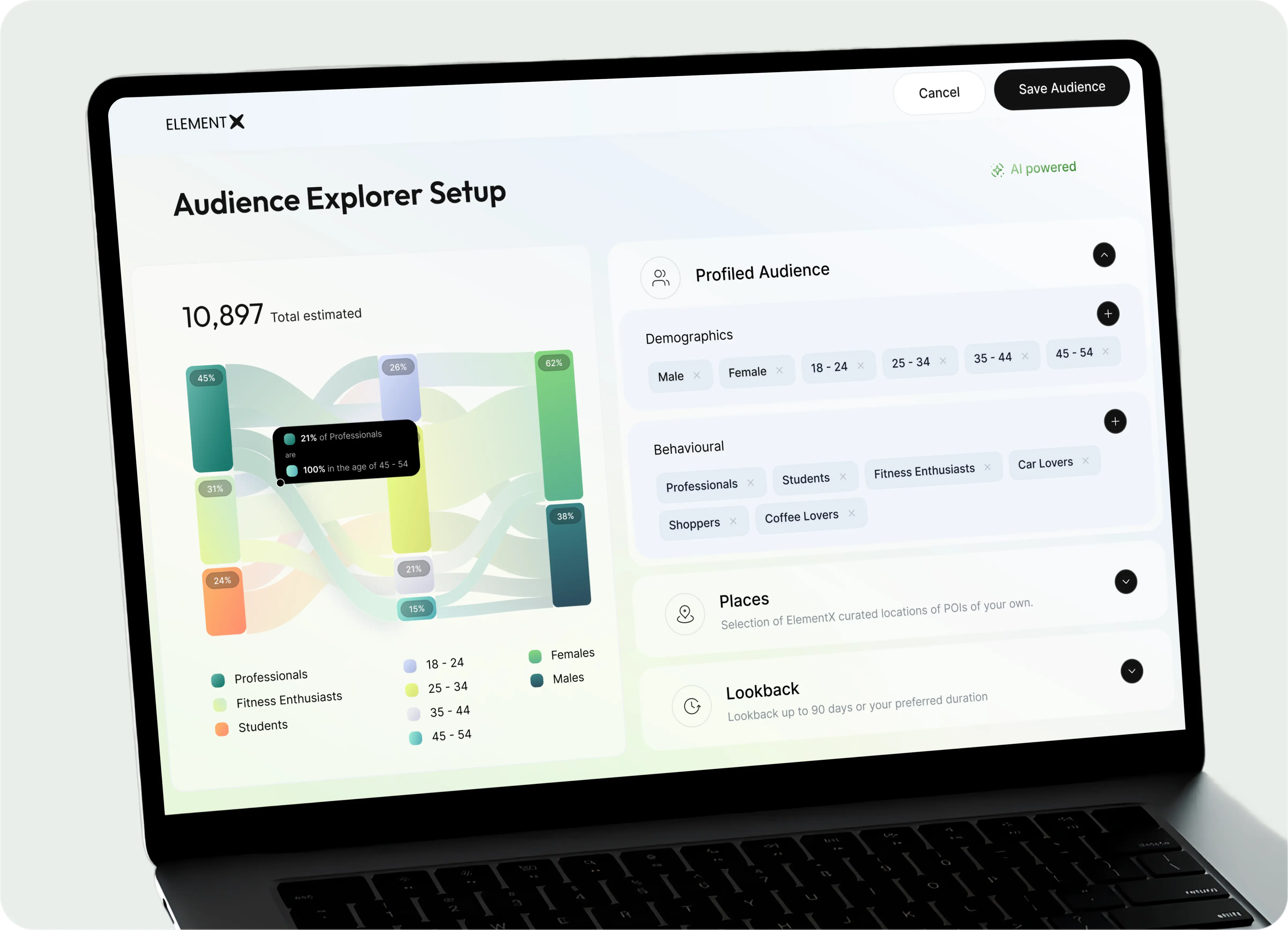
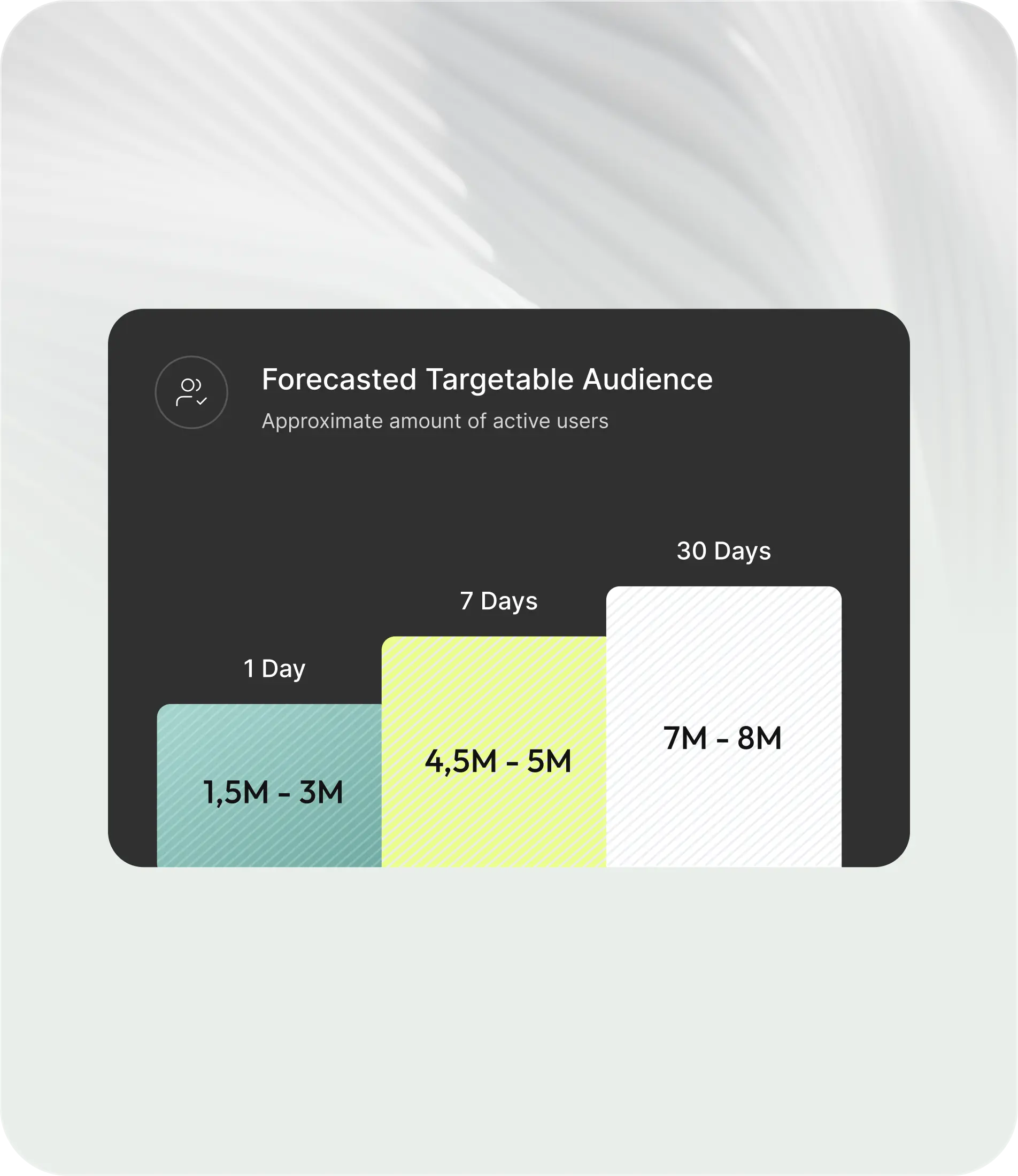
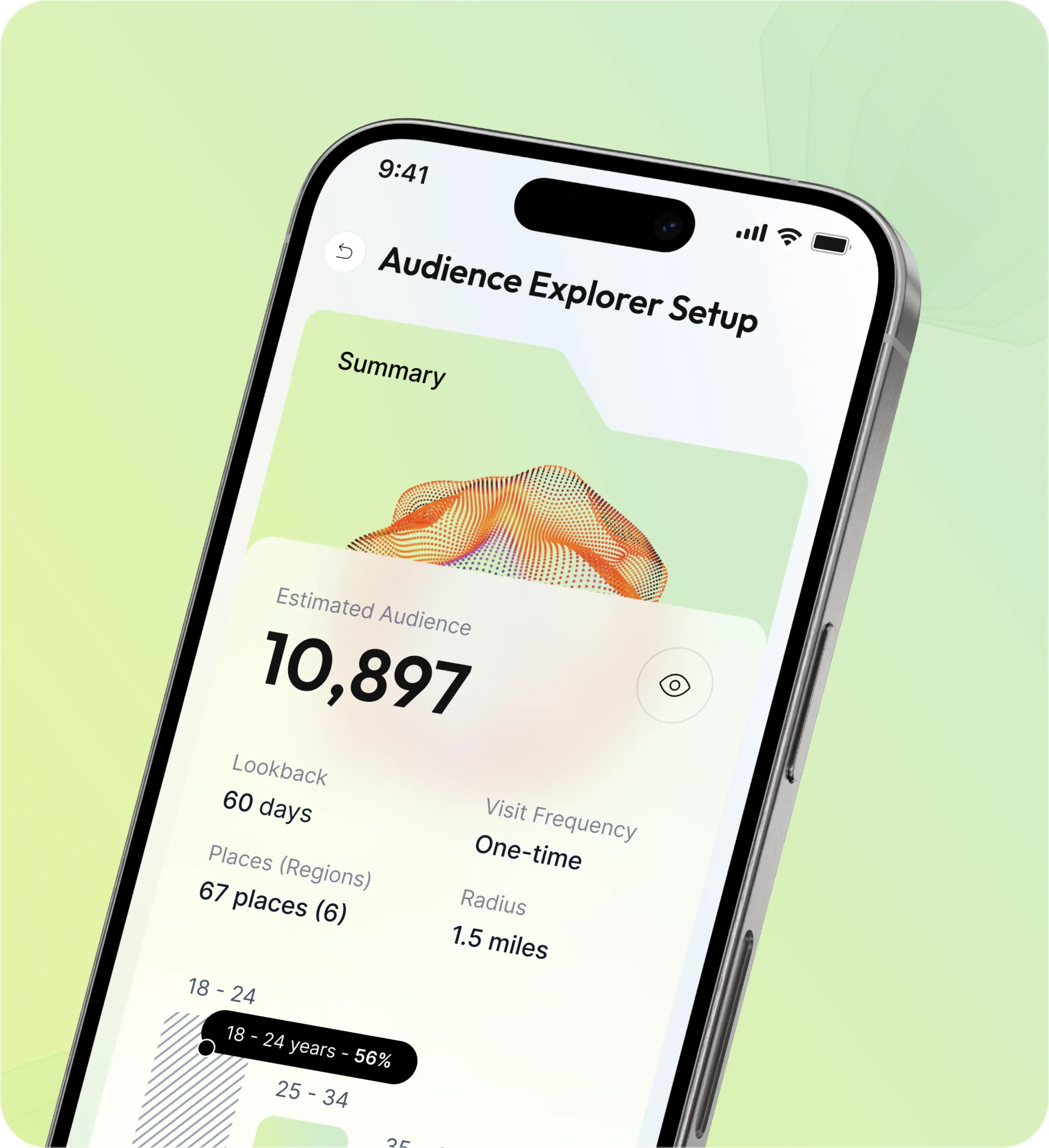
Designing for Trust
A 3-5 day process became a 31-minute workflow. No platform-switching, no retracing steps — just intent to launch.
49% of users came back to create another campaign within 7 days. Only 18% of AI outputs needed manual edits. The platform that once felt like assembling a machine from spare parts had become something marketers actually wanted to return to.
.avif)
.webp)