Top UX/UI Agencies Specializing in AI Interfaces in 2026

AI reshapes the business landscape, and finding an expert AI design agency or AI designer eventually becomes a critical step for founders and CTOs. Partnering with elite firms ensures your product scales effectively, balancing complex functionality with intuitive user experiences.
McKinsey found that 78% of organizations already use AI in at least one business function. What's lagging behind is usability.
Try a handful of AI products and the cracks surface fast. One gives an answer without showing where it came from. Another changes something but buries the undo option. A third asks you to trust a recommendation the model itself isn't confident about. The technology works; the experience around it often doesn't.
That gap matters because trust is still fragile. A Pew Research Center survey found 50% of US adults are more concerned than excited about AI's growing role in daily life. That doesn't mean people avoid AI products — it means those products get less benefit of the doubt when something feels opaque or out of their control.
We kept that in mind while researching the top UX agencies specializing in AI in 2026. A polished portfolio wasn't enough on its own. We looked for agencies that had actually worked with the messiness of real AI behavior: imperfect outputs, edge cases, responses that shift, and actions that sometimes need a human to sign off.
The difference usually comes down to a few unglamorous product decisions. Can someone see what the AI actually changed? Can they edit the result instead of starting over? Does the interface acknowledge uncertainty, or does every answer look equally final? And before an AI agent sends a message or updates customer data, does the user get a chance to check it first?
None of this is exciting on a slide. But it's what determines whether an AI feature is still useful once the novelty wears off.
Linkup ST
Website: linkupst.com
Founded: 2013
Location: United States, Delaware
Team Size: 80+
Rate: From $60/hr
Key clients: Reverso, TATA, Bosh, Freestone, Impactive
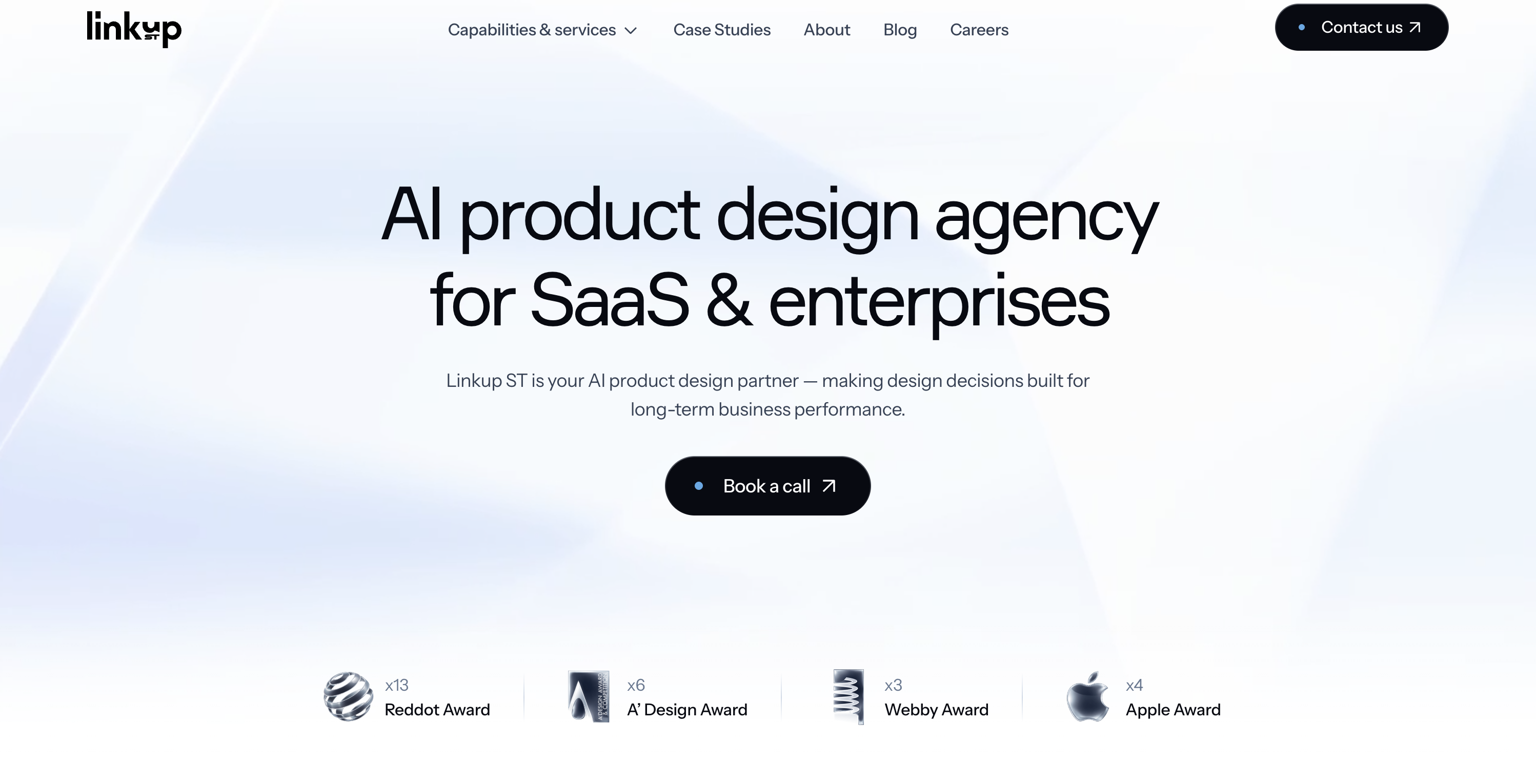
Linkup ST is a premier AI UI/UX design company that merges deep strategic thinking with user-centric execution. We use only proven frameworks – to consistently drive sustainable business growth. By focusing heavily on strategic alignment, the company ensures that B2B and enterprise products achieve maximum user retention and rapid market penetration without sacrificing functionality.
"Bridging the gap between complex AI logic and everyday user adoption."
We empower tech founders and CTOs by translating highly complex machine learning functionalities into intuitive, scalable digital products.
.png)
Qubika
Website: qubika.com
Founded: 2006
Location: United States, Texas
Team Size: 500+
Rate: From $50/hr
Key clients: Avant, OnePay, Shopify, MyRow, Tabula Rasa
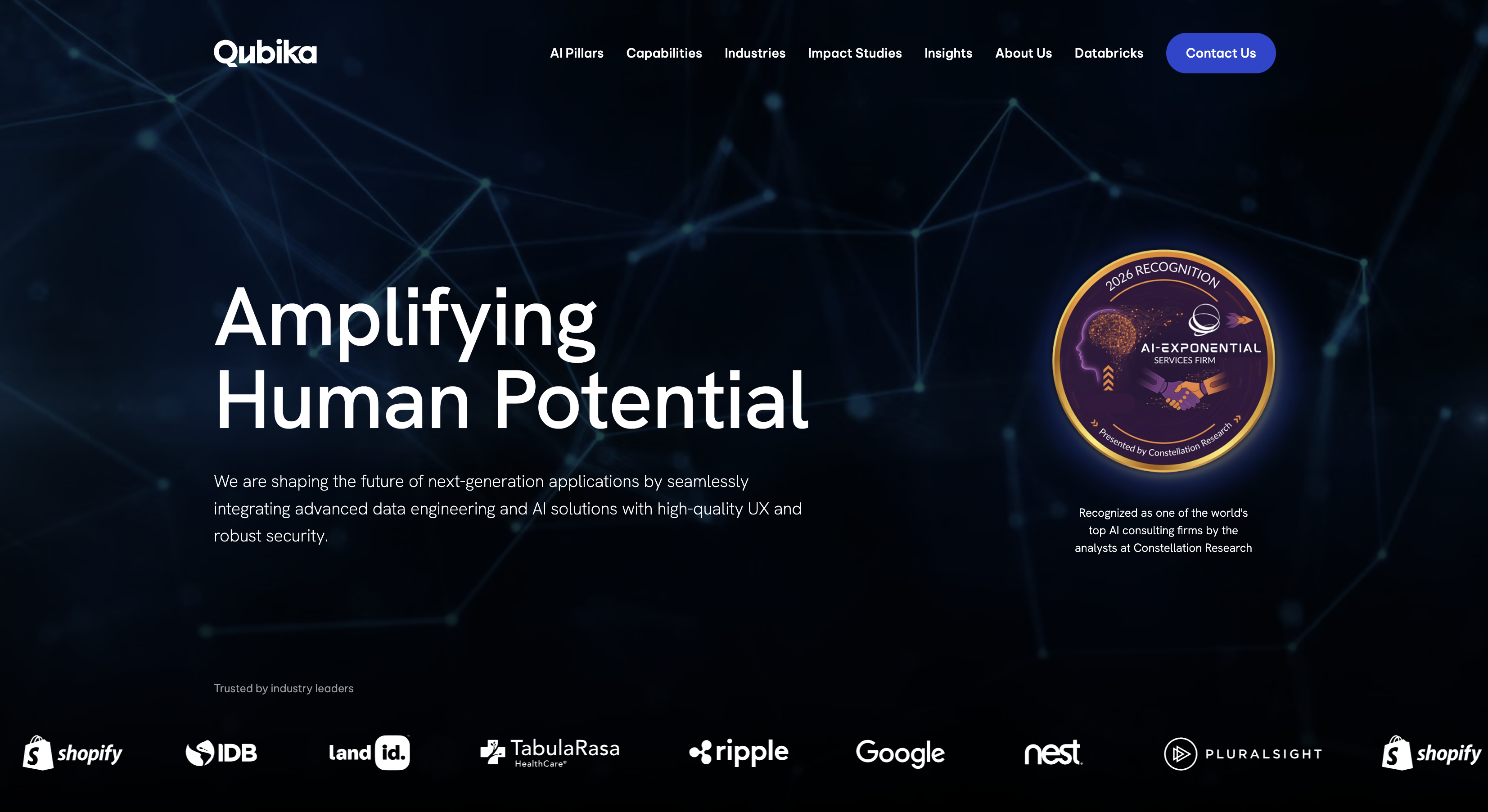
Operating as a highly innovative AI web design agency, they specialize in developing scalable AI agents and robust data platforms through their proprietary AccelerateAI framework.
Qubika is a Gold Tier Databricks partner, showcasing immense technical capability.
They prioritize a secure-first approach, blending rigorous cybersecurity compliance (SOC 2, ISO 27001) with exceptional product design to accelerate speed-to-market for modern applications.
GojiLabs
Website: gojilabs.com
Founded: 2014
Location: United States, California
Team Size: 10-49
Rate: From $100/hr
Key clients: WWF, KCRW, PredictionStrike, k-ID, Hard Assets Alliance
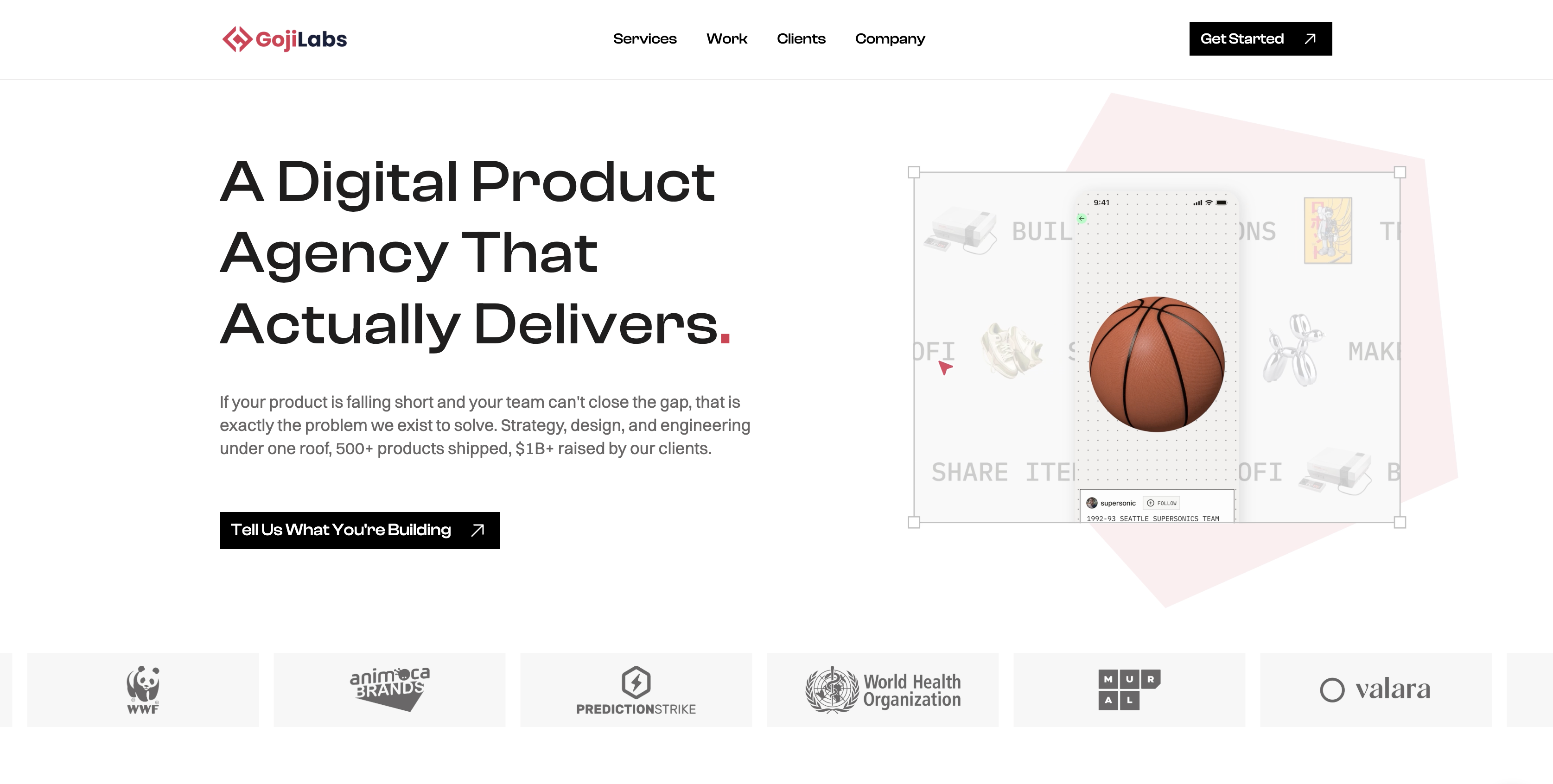
Goji Labs is a strategy-led digital product agency that has successfully launched over 500 products, helping their clients raise over $1B in venture funding.
Recognized as one of the top ai design agencies, they turn complex artificial intelligence challenges into intuitive software systems.
"Applying AI with clear purpose and measurable business outcomes."
They excel in mitigating technical and market risks – through meticulous product strategy.
Clay Global
Website: clay.global
Founded: 2009
Location: United States, California
Team Size: 50+
Rate: From $150/hr
Key clients: Meta, Google, Stripe, Slack, Coinbase, Amazon
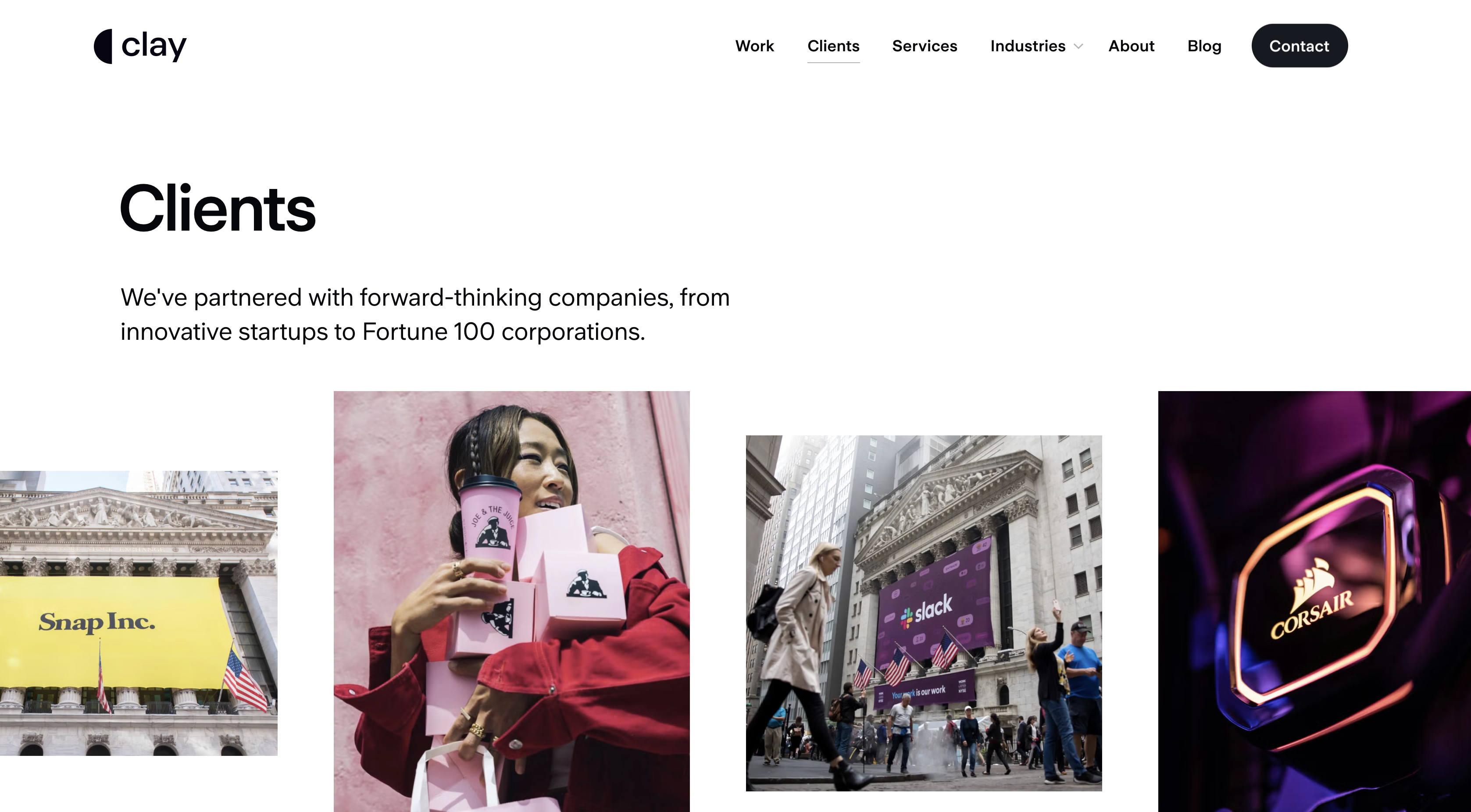
Clay is a globally renowned UX design and branding firm that masterfully merges human creativity with AI-driven efficiency.
Acting as a premier AI creative agency, they partner closely with global tech giants and ambitious startups to craft world-class digital experiences.
By pioneering generative AI within their UX processes, they seamlessly humanize complex B2B and B2C products, delivering interfaces that are highly scalable, visually striking, and universally intuitive.
Neuron
Website: neuronux.com
Founded: 2016
Location: United States, California
Team Size: 10-49
Rate: From $100/hr
Key clients: Vendr, AcuityMD, Listrak, HMH
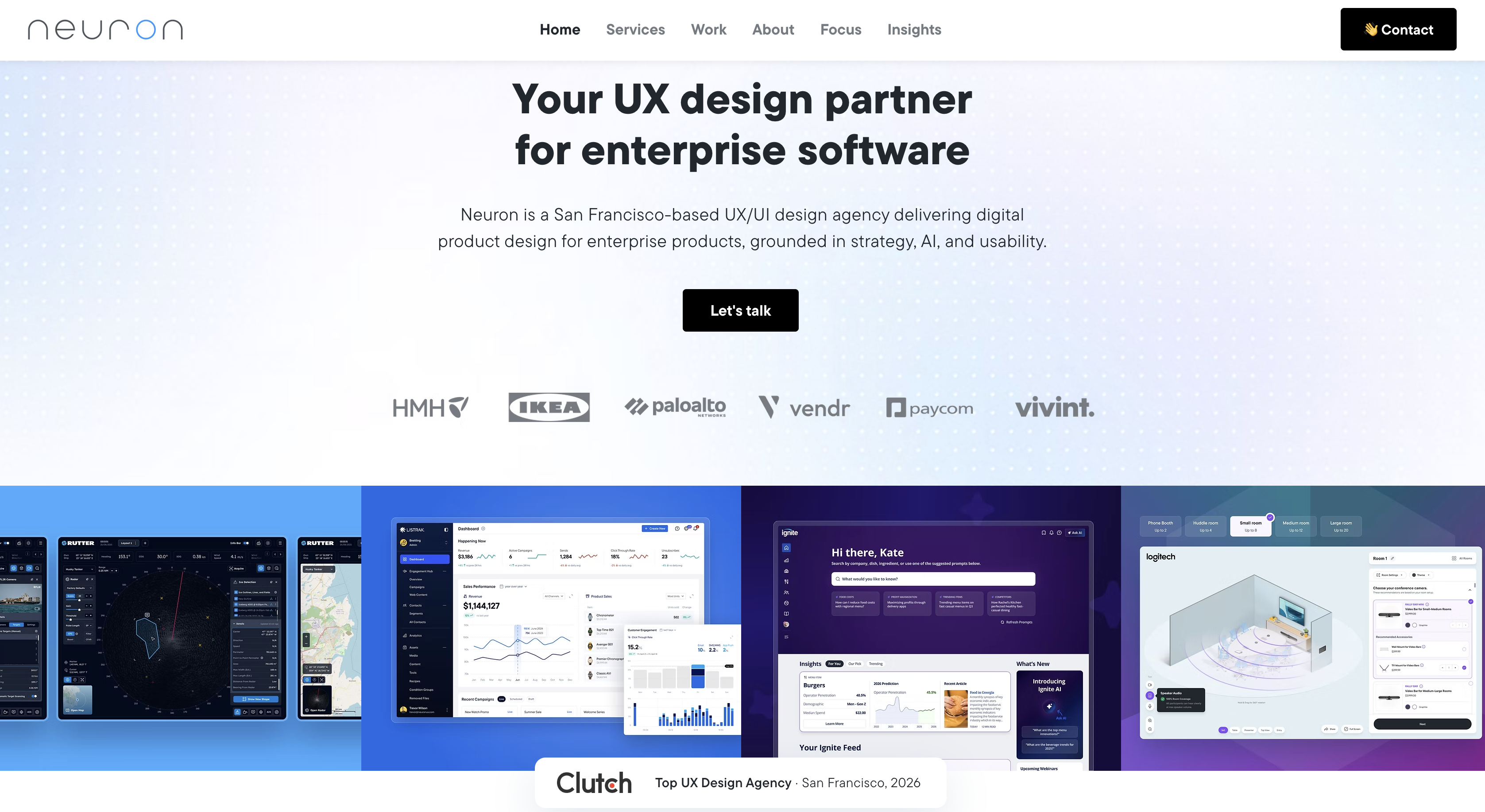
Neuron is a highly specialized AI design company based in San Francisco, dedicated entirely to improving B2B enterprise software.
"Making complex B2B software easy and genuinely enjoyable to use."
They excel at turning dense, complex AI capabilities and robust data sets into human-centered digital workspaces.
Metalab
Website: metalab.com
Founded: 2006
Location: Canada, British Columbia
Team Size: 250+
Rate: From $150/hr
Key clients: Midjourney, Uber, Robinhood, Suno, The Atlantic
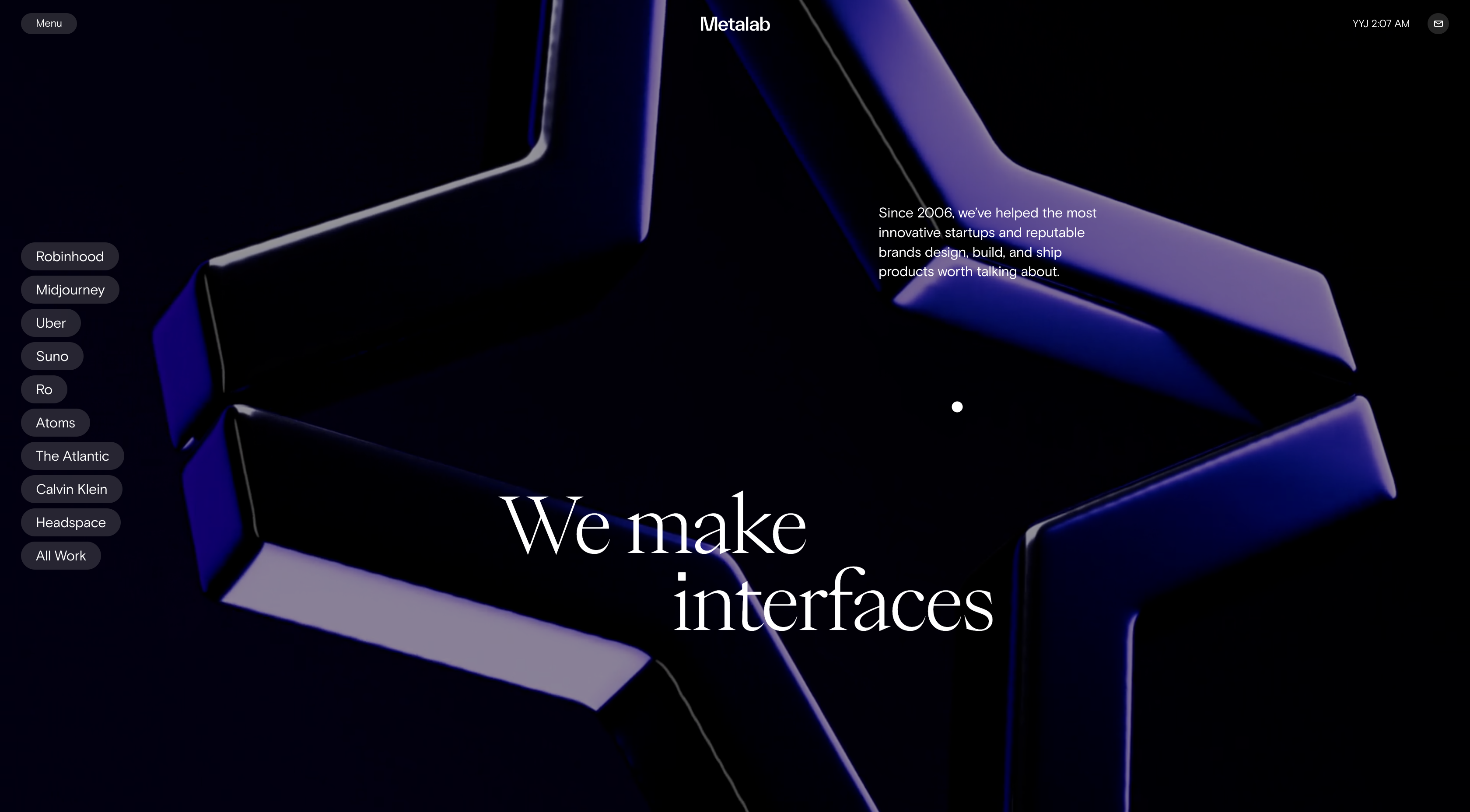
MetaLab helps the most innovative startups and F500 brands design and ship products worth talking about. Known among the top AI design companies, they crafted the original intuitive interface for Midjourney.
"Crafting visual foundations for the world's most widely used platforms."
Ideo
Website: ideo.com
Founded: 1991
Location: United States, California
Team Size: 500+
Rate: From $200/hr
Key clients: Ford, Sephora, H&M, Moderna, Boom Supersonic
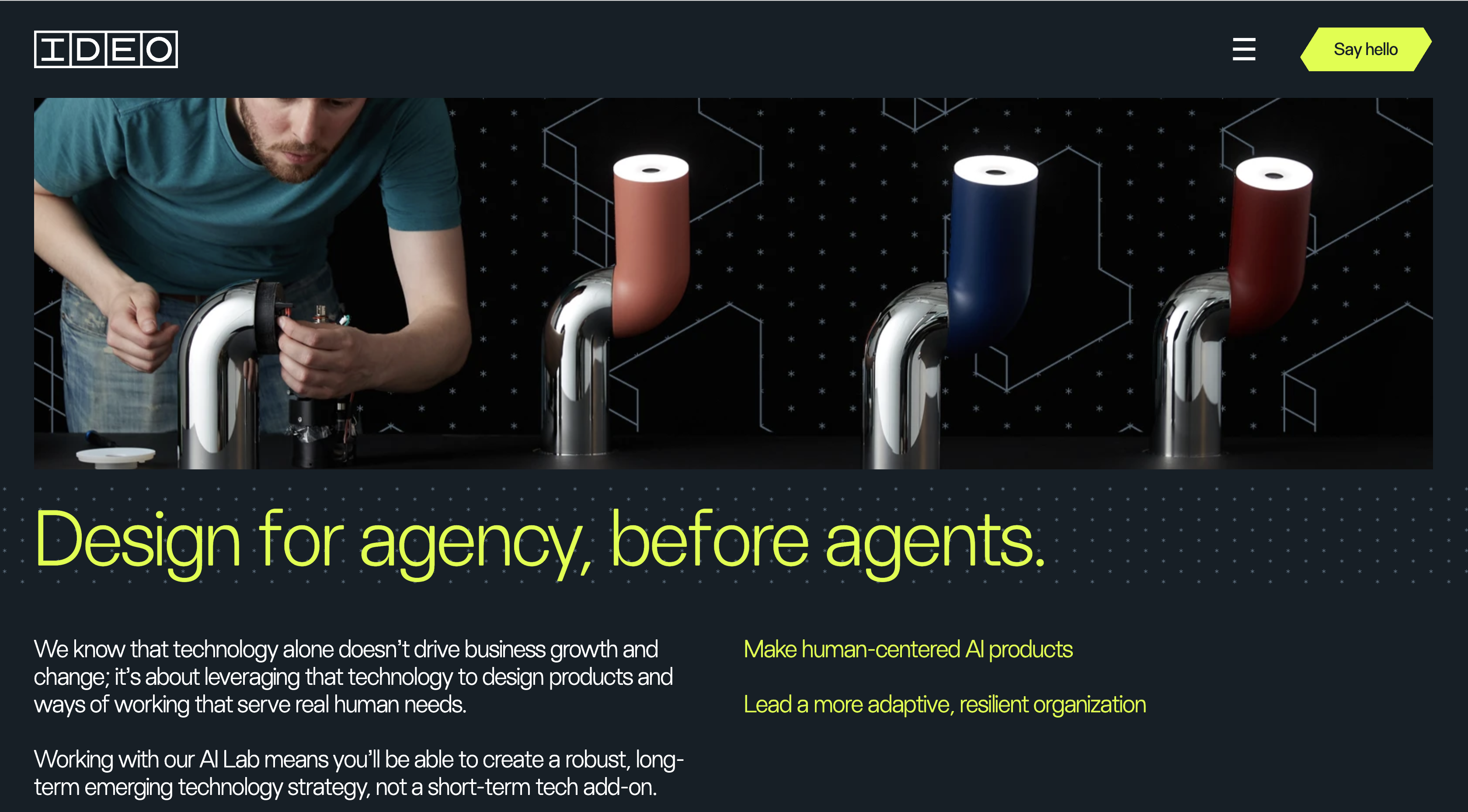
IDEO excels at designing for human-machine partnerships – by pioneering active human-AI collaboration, they help global tech leaders accomplish complex digital transformations.
They empower founders to build intelligent AI systems that augment human capabilities rather than alienating users – solving real business challenges.
frog
Website: frog.co
Founded: 1969
Location: United States, New York
Team Size: 1000+
Rate: From $150/hr
Key clients: Unilever, IKEA, Volvo Group, Sanofi, Tiffany & Co.
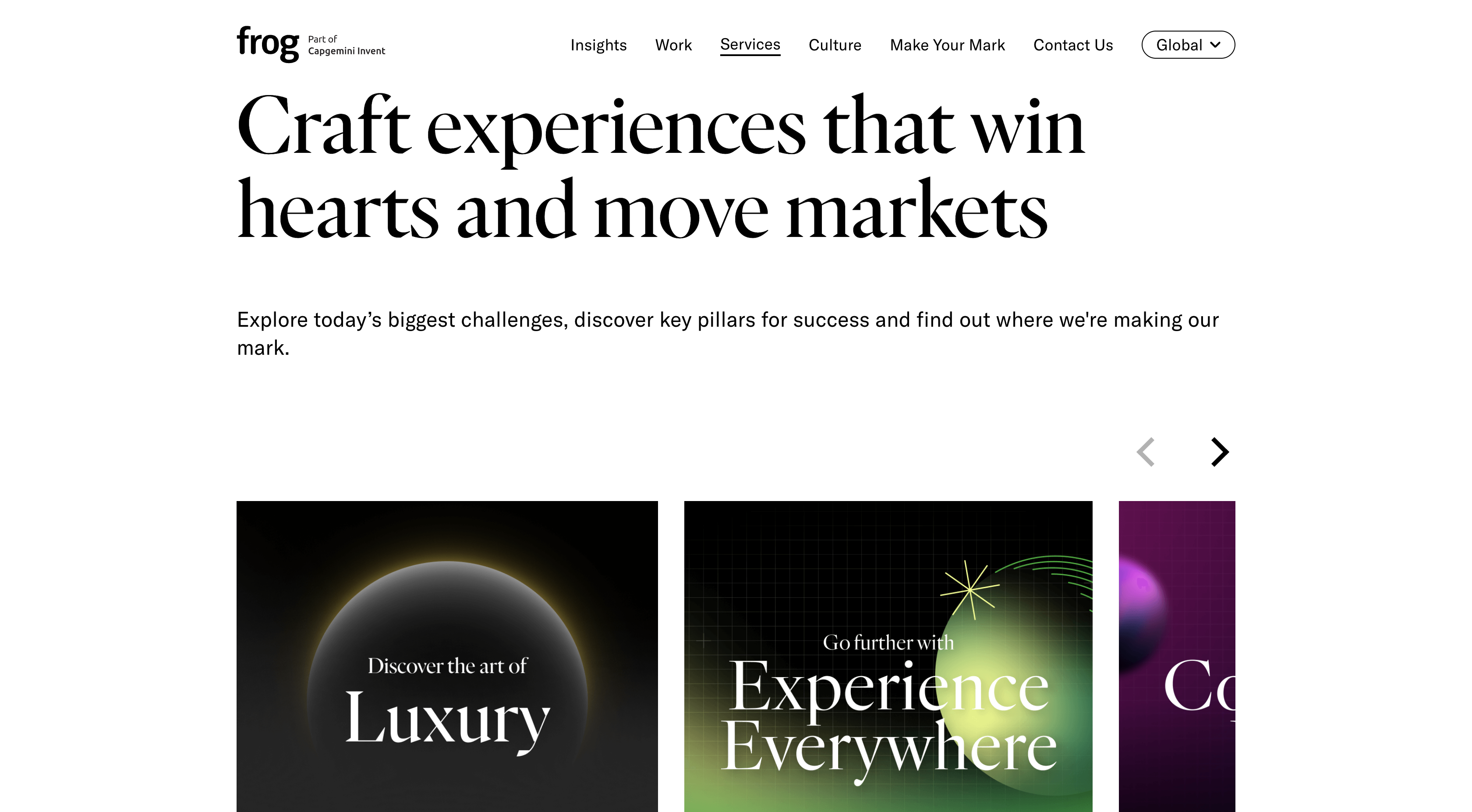
frog is a premier AI UI/UX design company and global reinvention partner, part of Capgemini Invent.
Renowned for their human-centered approach to physical AI and complex systems, their strategic frameworks help enterprises integrate AI to deliver highly intuitive customer experiences that win markets.
"Fuse art & science to make ideas real."
Work & Co
Website: work.co
Founded: 2013
Location: United States, New York
Team Size: 400+
Rate: From $150/hr
Key clients: Apple, Google, Nike, Pfizer, LOEWE
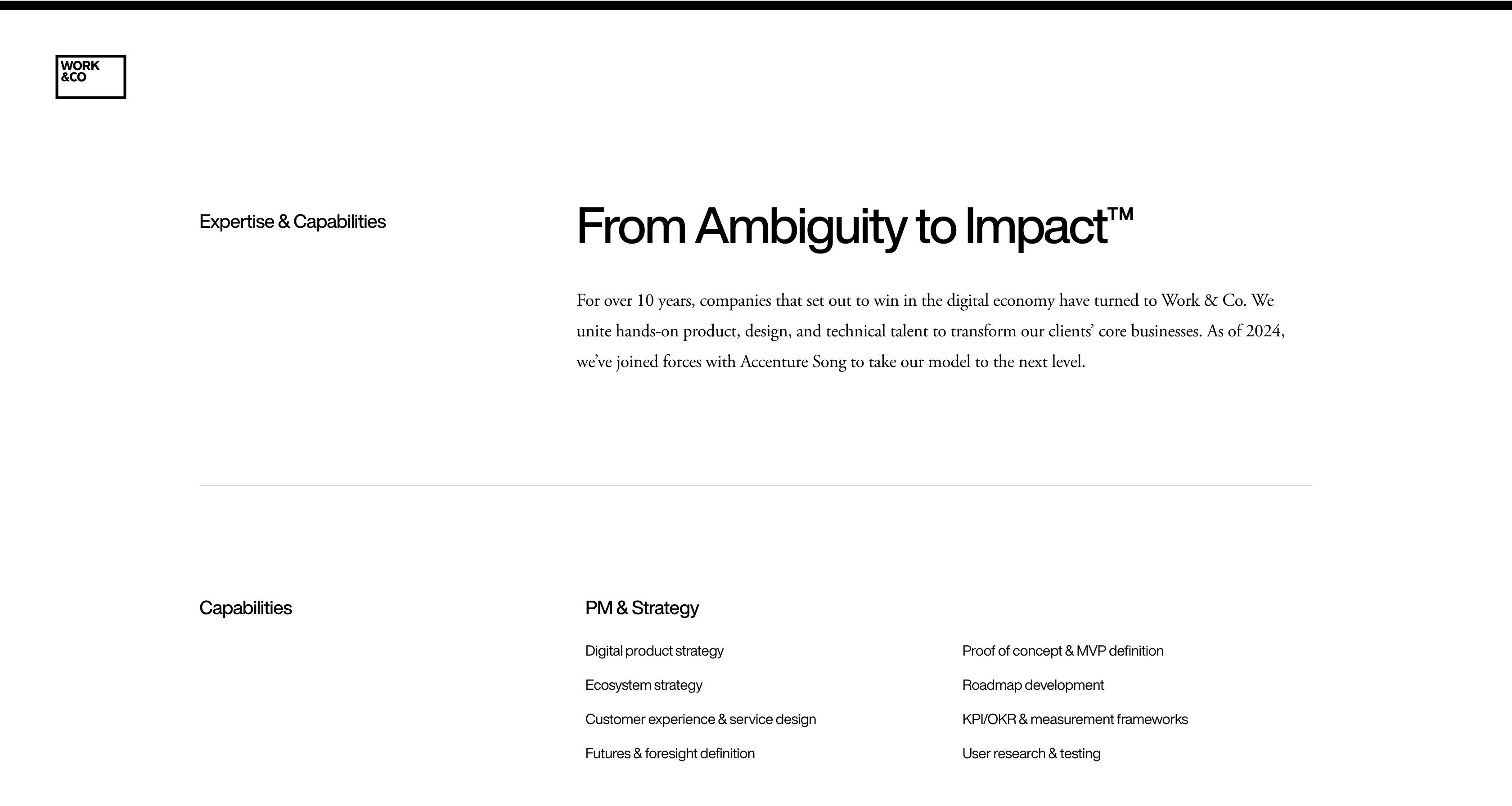
Work & Co is dedicated exclusively to core digital products and rapid deployments.
Entrusted with digital innovation by the world's top brands, their hands-on approach makes them an ideal partner.
They prioritize continuous prototyping – drastically accelerating speed-to-market for complex AI models while maintaining good digital quality and scalable performance.
Accenture
Website: accenture.com
Founded: 1989
Location: Ireland, Dublin
Team Size: 10,000+
Rate: From $150/hr
Key clients: Škoda, Siemens Energy, WWF, Bristol Myers Squibb
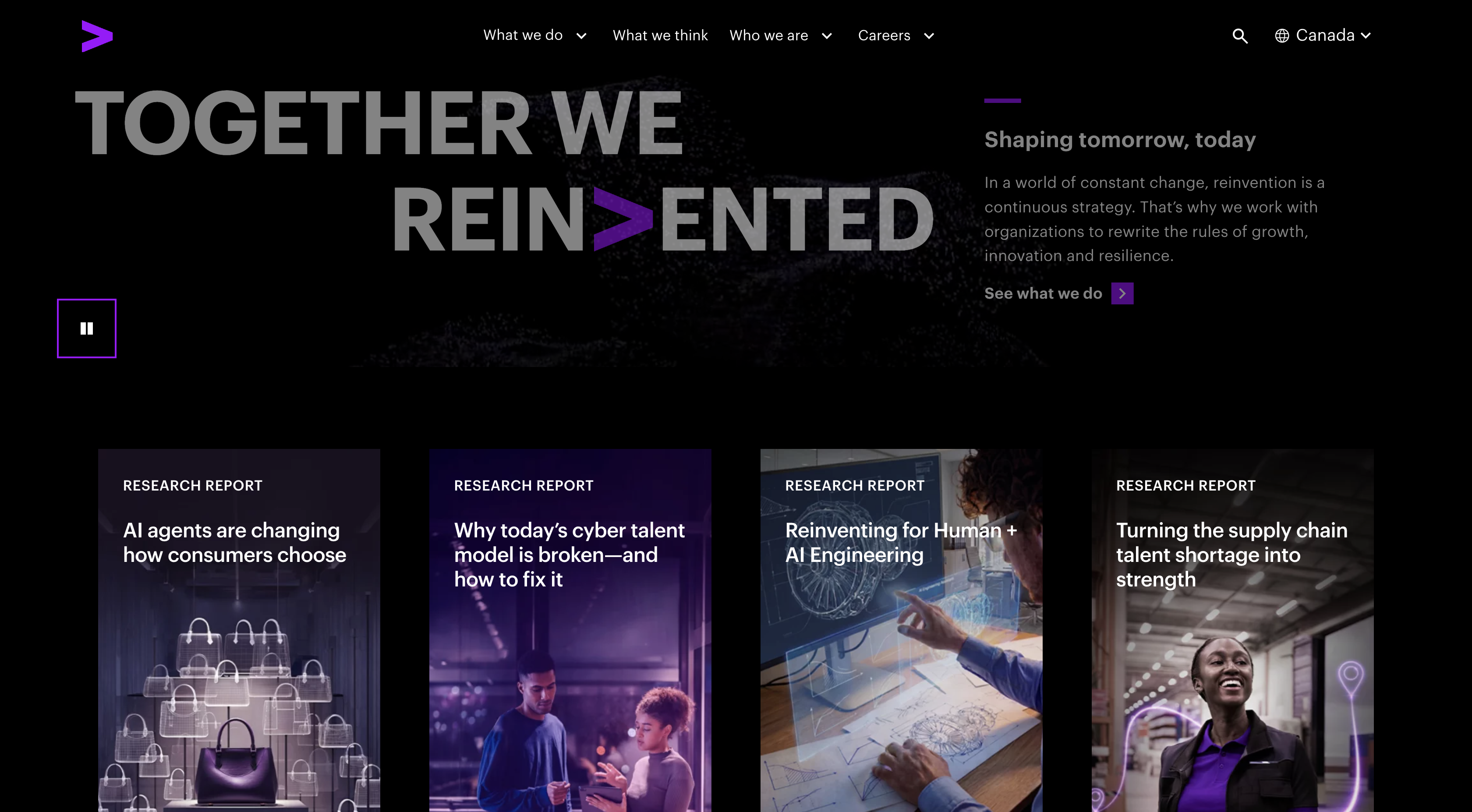
Accenture empowers global enterprises to successfully map and navigate the AI era.
With robust data strategies they provide the ultimate security for enterprise-grade AI digital transformations, scaling generative AI safely across entire global ecosystems.
Top AI Design Companies: How to Choose the Right Partner in 2026
1. Evaluate Their Strategic Business Acumen
For a successful partnership, look for firms that deeply understand your target audience and precisely how artificial intelligence can uniquely drive ROI. Top UX agencies specializing in AI design solve real-world market problems for your customers and understand your core business goals.
2. Check for Proven AI Interface Experience
The ideal partner must have a verifiable, proven track record in AI product design. Ask for detailed case studies demonstrating exactly how they have transformed generative AI tools or machine learning algorithms into user interfaces that drive adoption.
3. Assess Their Approach to Data and Security
Compliance: Ensure the agency adheres to strict security protocols (SOC2, GDPR).
Transparency: The best agencies design user flows that prioritize consent.
Safety: This is particularly crucial if you operate in heavily regulated industries like healthcare or finance.
4. Understand Their Prototyping and Testing Agility
AI products and models evolve at breakneck speeds. Your design partner should employ highly iterative prototyping – look for teams that can quickly pivot based on real-time feedback. They should minimize technical debt and accelerate your product's shipping to market.
5. Look for Human-Centered Ethical Design
As AI capabilities expand rapidly, ethical design becomes a critical differentiator. A premier agency ensures the AI's decision-making processes are understandable – avoiding frustrating "black box" scenarios that can alienate your base.
6. Analyze Communication and Collaborative Fit
The synergy between your internal engineering team and the external design agency dictates the overall success of the project. Prioritize partners who actively act as an extension of your company: clear communication channels, shared project management tools, and aligned cultural values are essential for a smooth workflow.
The Questions That Actually Tell You Something
Most AI design agencies will describe themselves the same way: strategic, user-centered, expert at "translating complexity." That language is nearly useless for screening, because every firm uses it regardless of whether they've actually shipped anything with real model behavior in it. What separates agencies that understand AI UX from ones that have added "AI" to their homepage is how they answer a handful of specific, hard-to-fake questions.
"Walk me through a screen where your design shows the AI was wrong, or wasn't sure."
Agencies that have only worked with deterministic software will struggle here — there's no equivalent problem to point to. Agencies with real AI experience usually have a fast, specific answer, because handling uncertainty and failure states isn't optional in that work; it's most of the job.
"What happens in your designs when a user wants to undo an AI action?"
If the answer is a generic explanation of "we prioritize usability," that's a tell. A team that has actually built this will talk about specifics — version history, diff views, confirmation states before irreversible actions — because they've hit the problem in production, not in theory.
"Show me a flow where the AI is about to act on the user's behalf. What does the user see before it happens?"
This is the confirmation-step question, and it's the one most agencies without agentic-product experience will visibly stumble on, because "agent about to do something consequential" is a design problem that's maybe two years old. Anyone with a real answer here has recent, relevant experience — anyone reaching for an old CRM-permissions example doesn't.
"How do you decide what the AI explains versus what it just does?"
Every AI product has to draw this line somewhere. The interesting answer isn't a rule — it's a story about a specific tradeoff they made and what happened when they got it wrong. That's what distinguishes people who've actually shipped this from people describing best practices they read.
None of these questions have a "correct" answer you're grading against — the value is in whether the response is specific and lived-in versus generic and rehearsed. A firm that's actually done this work will answer in seconds with a real example. One that hasn't will answer in principles.
.avif)